
Ras Jebel Basin (RJC), Tunisia
Addressing Saltwater Intrusion through Monitoring and Predictive Modelling
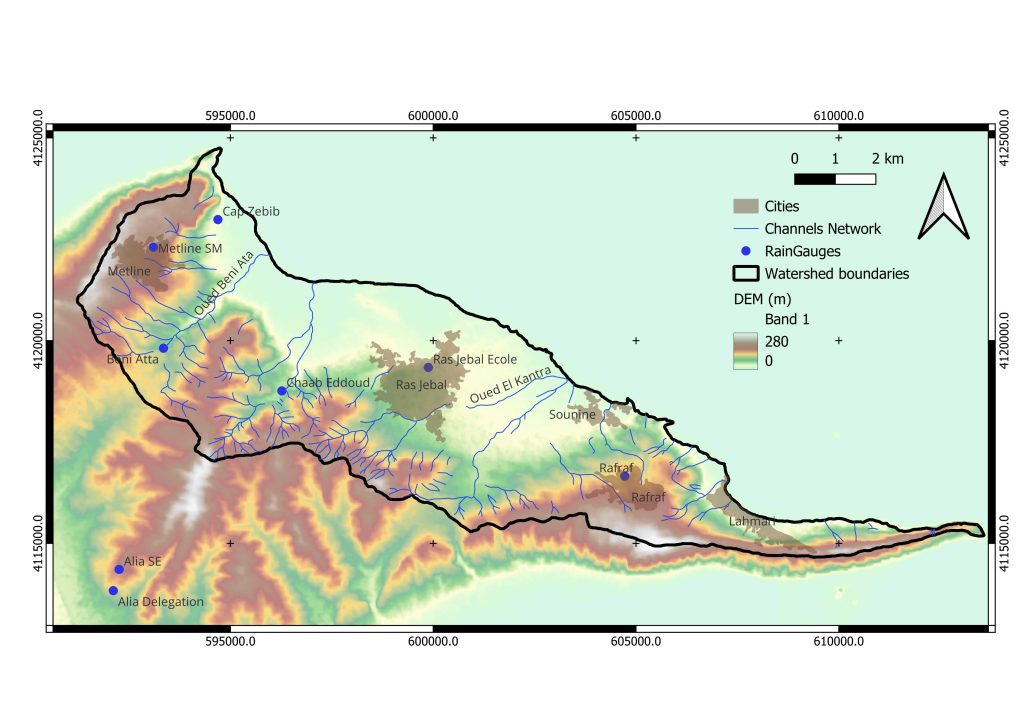
The Ras Jebel Area (Figure 1) is located in Bizerte Governorate, in northern Tunisia. It is a coastal basin of high economic, environmental, cultural, and landscape value. The area supports agriculture, local livelihoods, and sensitive coastal ecosystems, making groundwater a strategic resource for regional sustainability.
The Ras Jebel Basin faces multiple, interconnected pressures:
1. Saltwater intrusion (SWI) driven by long-term groundwater over-exploitation.
2. Declining groundwater levels and progressive water quality deterioration.
3. Recurrent droughts and flood events, intensifying climate stress.
4. Coastal erosion and increasing pressure on fragile ecosystems.
5. Urban expansion and anthropogenic pressure.
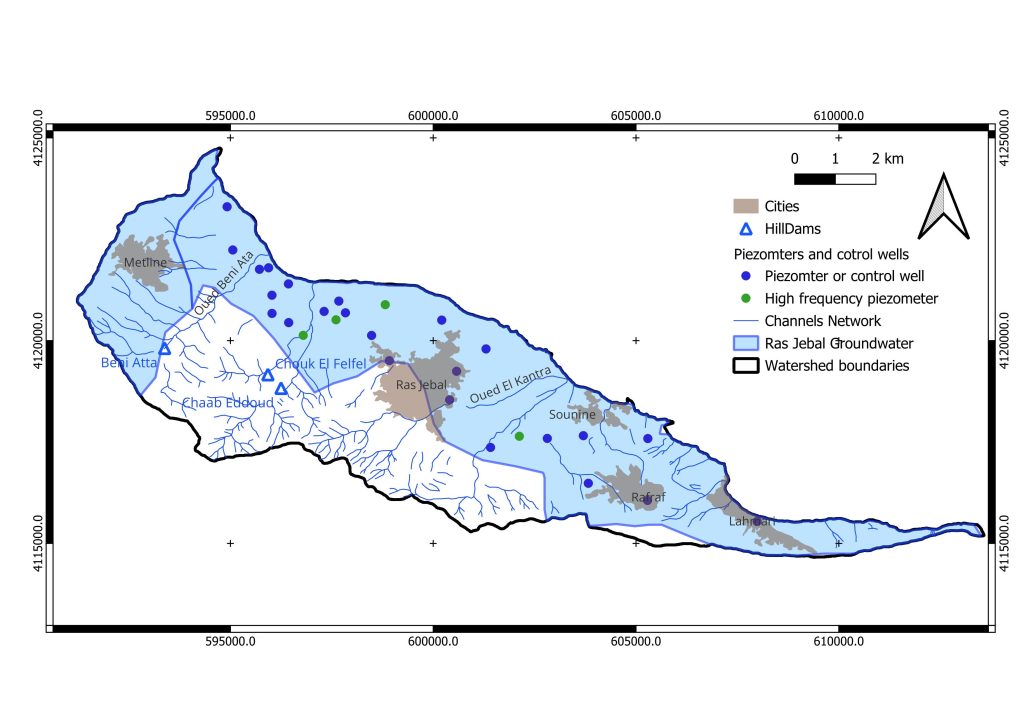
The Ras Jebel aquifer (Figure 2) is representative of many Mediterranean coastal aquifers, where abstraction has exceeded natural recharge for decades. Since 1966, monitoring records show a continuous decline in piezometric levels, accompanied by a marked increase in groundwater salinity. In the coastal zone of the aquifer, the relationship between falling groundwater heads and elevated salinity is particularly evident, confirming the inland advance of saline water. This trend has progressively reduced the suitability of groundwater for irrigation and domestic use, increasing reliance on external water transfers.
In response to accelerating saltwater intrusion, Tunisian water authorities—DGRE, DGBETH, and CRDA Bizerte—launched an artificial groundwater recharge programme in 1992. The system relied on surface water transfers from the Medjerda hydrosystem, with the objective of:
- Restoring groundwater levels
- Creating a hydraulic barrier against seawater intrusion
- Improving groundwater quality in the coastal zone
For several years, this intervention played a stabilizing role in the aquifer system. Since 2018, prolonged and severe drought conditions across Tunisia have rendered the artificial recharge system inoperative. Reduced surface water availability has halted transfers from the Medjerda system, undermining the core mechanism designed to protect the aquifer. As a result, the basin is now experiencing a dual crisis:
- Acute water scarcity
- Accelerating groundwater salinisation
The Ras Jebel Area illustrates the limits of infrastructure-dependent adaptation under increasing climate variability. It highlights the need for:
- Improved saltwater intrusion monitoring
- Predictive modelling to anticipate salinity dynamics under future climate and abstraction scenarios
- Integrated groundwater management strategies that combine demand regulation, climate resilience, and long-term planning
This case provides critical lessons for coastal aquifer management across the Mediterranean, where climate stress is increasingly outpacing existing governance and technical solutions.